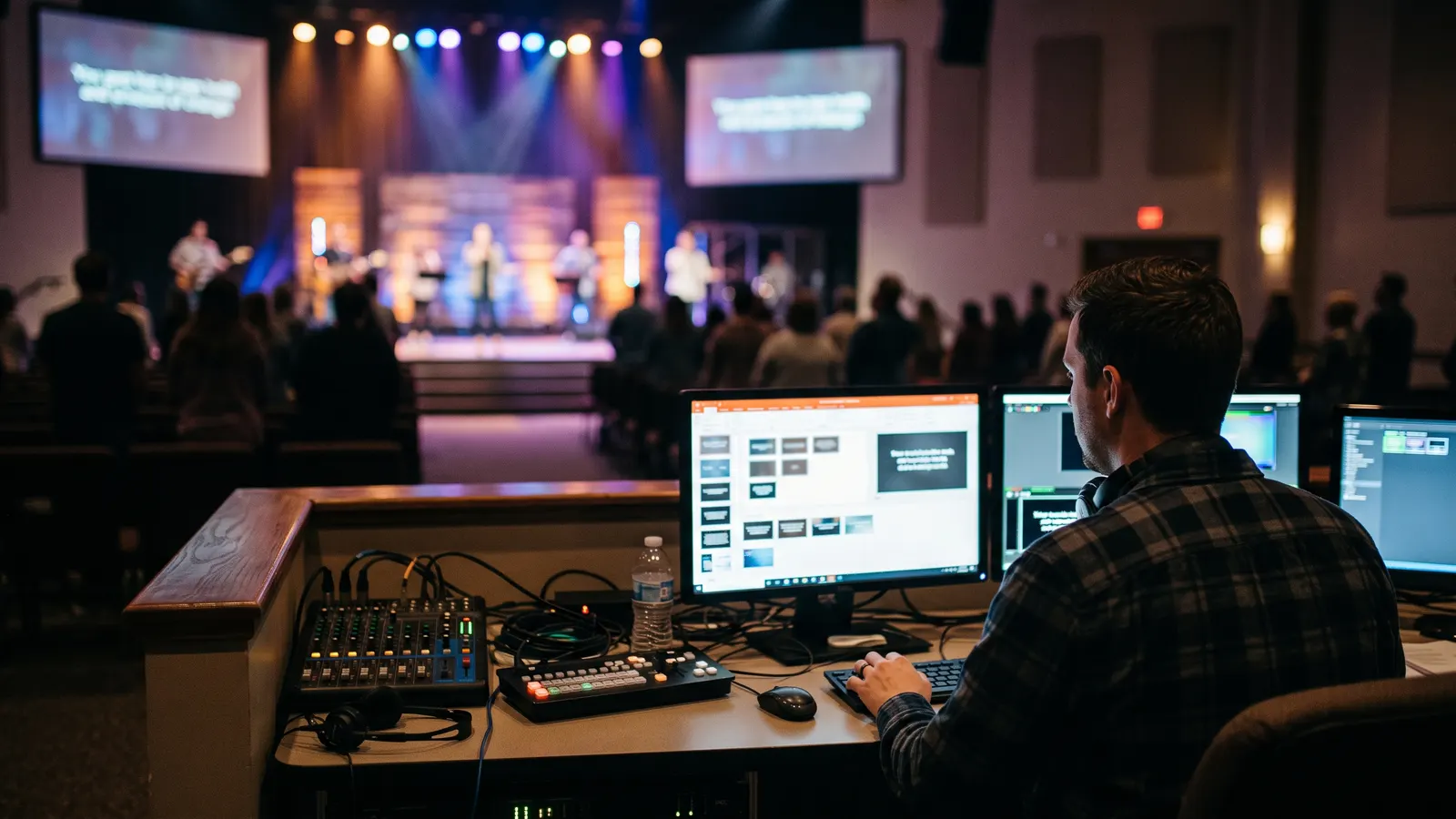
Most Sunday problems are not equipment problems. They are coordination problems: the wrong slide, a mic that was not live, a transition nobody called. A run of show fixes the coordination, so the equipment problems that remain are the only ones you have to solve.
What a run of show is
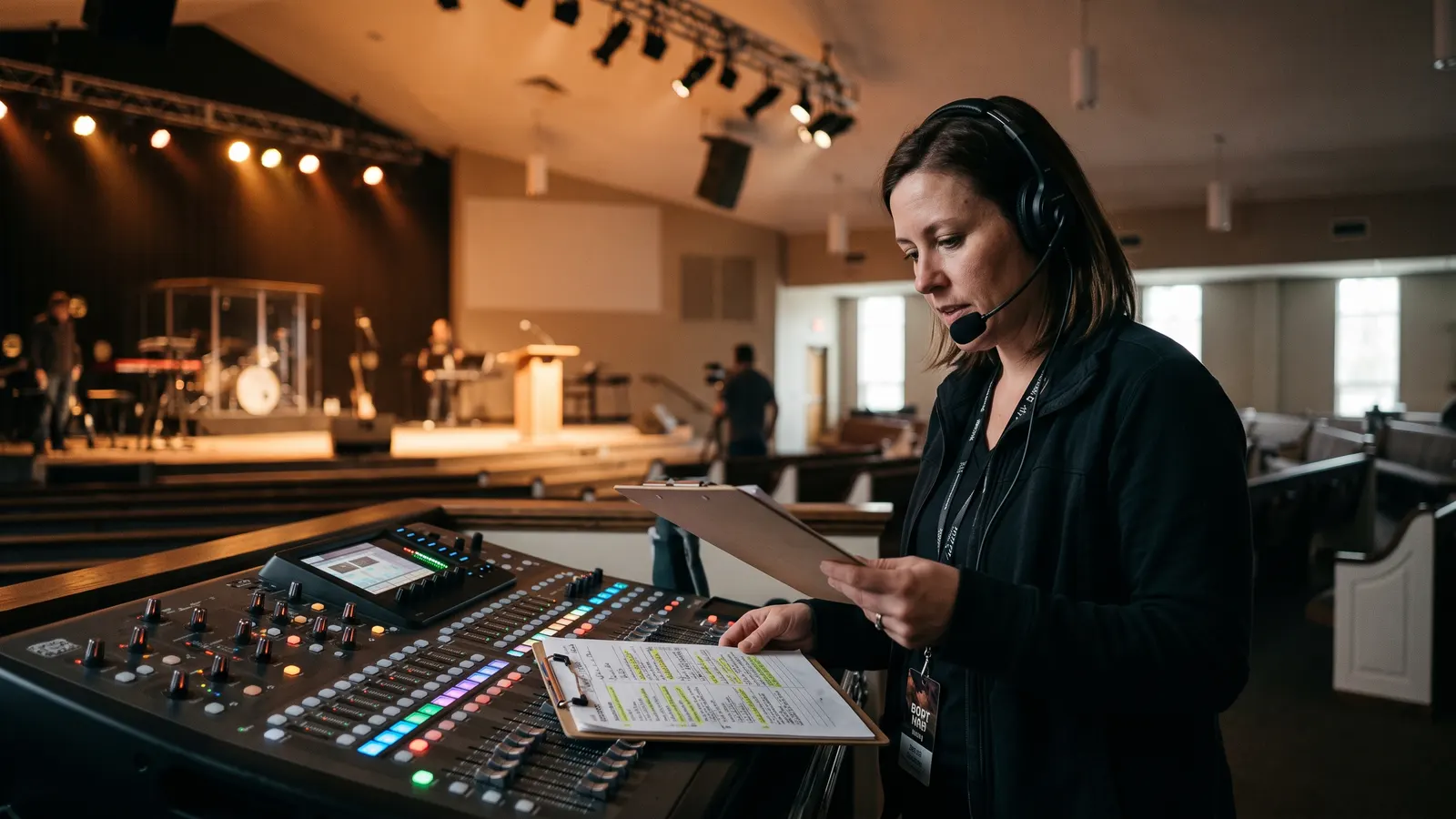
A single document, in time order, that lists every element of the service with its start time, its length, who is on stage, and what each position does: sound, lights, slides, cameras and stream. Everyone on the team reads the same page, and the person calling the service reads it aloud.
What each line should include
- Clock time and duration, so drift is visible before it becomes a problem.
- The element: song, welcome, announcements, message, response, dismissal.
- Who is on stage and which microphones are live.
- The slide or media cue, by file name.
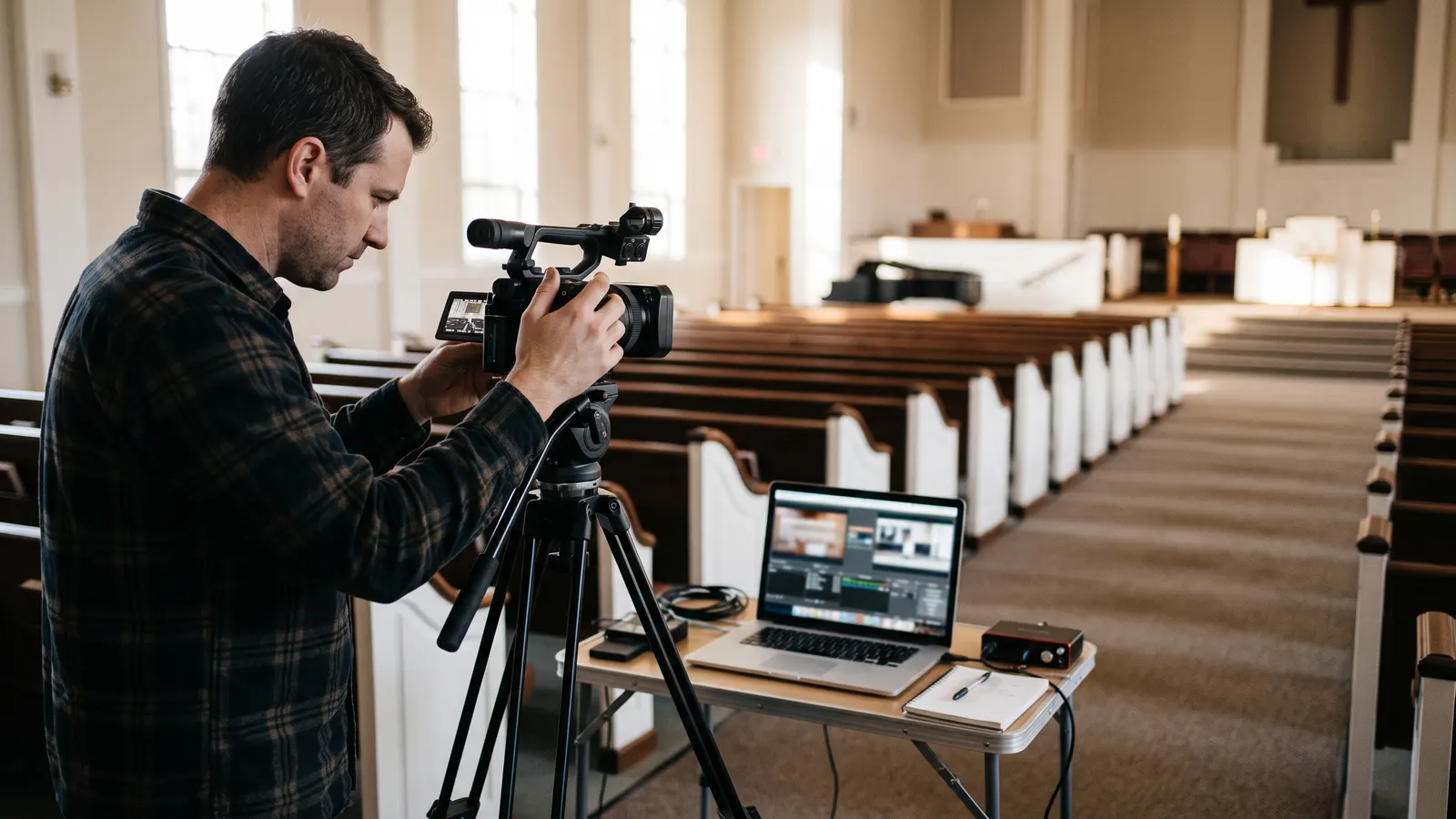
- Camera shot and stream note, if you stream.
- A transition note: how this element ends and the next begins.
How the week runs
The plan is drafted early in the week from the worship and teaching plan. Mid-week, media files are collected and named to match the sheet. The day before, the sheet is final and shared. Sunday morning starts with a walk-through of the sheet, not a scramble for files.
Why a coordinator, not just a sheet
The sheet is only as good as the person who owns it. A coordinator chases the missing files, confirms the pastor’s slides, assigns positions and calls the service live. Volunteers can run positions well when someone else owns the whole picture.